
COVID-19 Hapu Response Strategy
Puanga nui o te rangi
Coming Together at Taipā
On 20 June 2025, more than 200 people gathered before dawn at Taipā Point for Puanga-nui-o-te-rangi, a Matariki celebration bringing together whānau from Kauhanga, Parapara and Haititai Marangai marae, alongside the wider community. The kaupapa built on earlier Matariki celebrations at Kauhanga, but this time the invitation was wider. It provided an opportunity for the three marae to work together and share a celebration grounded in whakapapa, mātauranga, whenua and the seasonal traditions associated with Puanga and Matariki.
Importantly, the gathering took place at Taipā Point, connecting the celebration directly to the whenua and moana rather than simply providing a venue for an event.
Three Marae – One Kaupapa
Puanga-nui-o-te-rangi was a collective effort. Representatives from Kauhanga, Parapara and Haititai Marangai met weekly for four weeks leading into the event, working together on the programme, logistics and tikanga. Each marae brought its own kawa, kōrero and strengths to the planning and delivery of the kaupapa.
That collaboration was itself an important part of the kaupapa. Working together created opportunities to strengthen relationships between the marae, share responsibility and develop leadership and planning capability. Around 50 people contributed as participants and volunteers, with support also coming from local organisations including Te Kura Kaupapa Māori o Tūtūtarakihi and Moana Pacific.
Whānau contributed in different ways—planning, preparing the site, hosting, performing, preparing kai and doing the many jobs required to bring a large gathering together. Tamariki and rangatahi worked alongside pakeke and kaumātua, making the event another opportunity for generations to learn through participation rather than simply observation.
Gathering Before Dawn
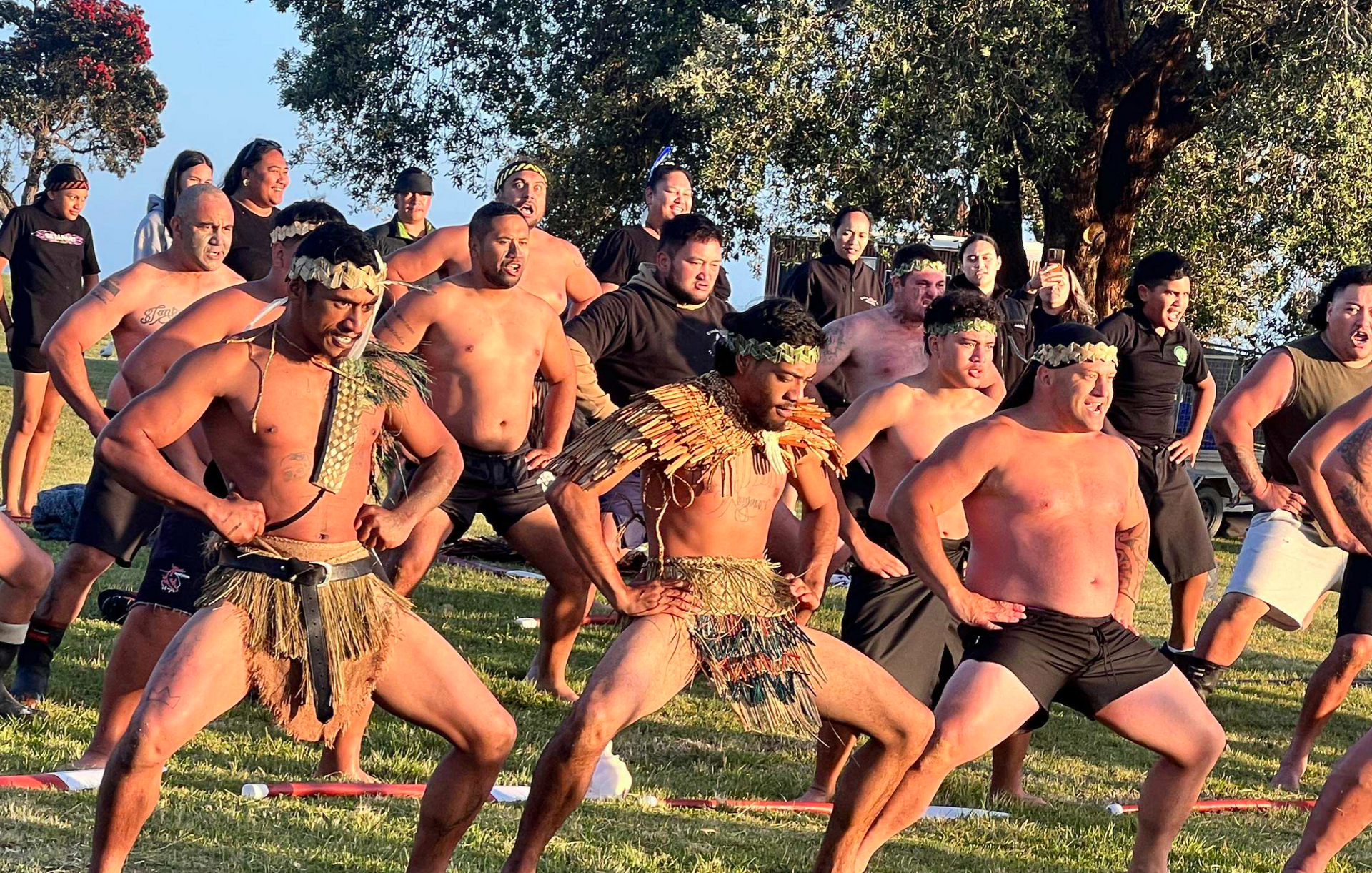
Preparations began at Taipā Point on 19 June before whānau and visitors gathered early the following morning. The celebration included hautapu, karakia, waiata and mihi whakatau, followed by a shared hākari. The intention was to create a space for remembrance and renewal while allowing people to experience mātauranga Māori as a living practice.
Kōrero tuku iho was shared throughout the gathering, creating opportunities for whānau to reconnect with collective memory and for the wider community to hear some of the histories and knowledge held by mana whenua. Karanga, whaikōrero, waiata and pūoro were part of the experience, alongside the simple but important act of sitting down and sharing kai together.
More than 200 people attended the early morning ceremony, from tamariki through to kaumātua. Feedback afterwards reflected a strong sense of pride and belonging, with many commenting on the richness of the kōrero tuku iho that had been shared.
Sharing our Tikanga with the Wider Community
Unlike the earlier Matariki celebration at Kauhanga, Puanga-nui-o-te-rangi deliberately created space for the wider Far North community to participate in a kaupapa led by local hapū.
For mana whenua, it was an opportunity to come together around shared whakapapa and mātauranga. For visitors, it offered the chance to participate respectfully in tikanga, experience manaakitanga and learn more about the cultural traditions of the people and place in which they live.
This wider participation did not mean setting aside the identity of the individual marae. Instead, Kauhanga, Parapara and Haititai Marangai each brought their own identity and strengths while recognising the whakapapa and relationships that connect them.
Strengthening Relationships through Kaupapa
One of the clearest outcomes of Puanga-nui-o-te-rangi was what happened between the people involved in making it happen. Four weeks of planning, preparing and problem-solving together strengthened relationships between the three marae. On the day, that collaboration expanded to include volunteers, local organisations, whānau and the wider community. The event provided opportunities for people to contribute their skills and energy while younger generations worked alongside those with greater experience.
The response afterwards was equally encouraging. Attendance exceeded expectations, volunteer involvement was high, and whānau asked for more opportunities for the marae to come together. The experience also strengthened leadership and planning capability across the three marae and created momentum for future collaborative kaupapa.
Puanga-nui-o-te-rangi demonstrated what becomes possible when our marae work together. At Taipā Point, whānau from three marae stood alongside one another before dawn—not only to remember and celebrate, but to strengthen the relationships that connect our people and create new opportunities to work together in the future.