
COVID-19 Hapu Response Strategy
Te Kotahitanga o Ngāti Kahu
In August 2023, whānau came together at Kauhanga Marae for a kaupapa that would see Te Kotahitanga o Ngāti Kahu stand again after more than 20 years.
Te Kotahitanga o Ngāti Kahu was originally established in 1994 to encourage our rangatahi to learn waiata for ngāhau and kapa haka competition. Following the national kapa haka competition in 2000, the kapa became inactive. Then, in August 2023, with the support of our kaumātua, the call went out for whānau to come home and bring the kapa back to life.
Coming Home to Learn Together
The revival was supported through Te Waharoa, an Adult Community Education programme delivered through Te Paatū ki Kauhanga Trust Board and Te Whare Wānanga o Awanuiārangi. The programme provided an opportunity to bring learning back to the marae, grounded in our own waiata, tikanga and mātauranga.
Over five wānanga, whānau gathered at Kauhanga and online to learn waiata, mōteatea and waiata-ā-ringa. Some travelled home from Tāmaki Makaurau, Whangārei and Kirikiriroa to take part. Kaumātua, pakeke, rangatahi, tamariki and mokopuna learned alongside one another, while whānau from across the different marae and hapū of Ngāti Kahu joined the kaupapa.
At the heart of the wānanga was a simple goal: to learn the waiata of home. From there came wider aspirations—to know the waiata of our marae and hapū, Ngāti Kahu, Muriwhenua and Tai Tokerau; to be able to stand confidently at ngāhau and support waiata wherever we might be; to strengthen relationships between our whānau, marae and hapū; and to deepen our connection with Te Ao Māori.
Whānau Teaching Whānau
The kaupapa drew on knowledge already held within our whānau. Ikanui Kingi-Waiaua and Ngaire Tauhara-White were kaiako matua, supported by a six-person teaching team whose collective knowledge helped bring the waiata to life. Kiritopa Henare provided guidance and support through Te Whare Wānanga o Awanuiārangi.
Thirty-nine whānau enrolled, and participation remained strong throughout the programme. But the numbers tell only part of the story. In their feedback, whānau spoke about learning old waiata they had never had the opportunity to learn growing up, being able to learn alongside their children and mokopuna, and gaining the confidence to stand and participate in waiata and ngāhau. Others simply valued being home, surrounded by whānau and learning together.
Carrying the Kaupapa Forward
The impact reached beyond the five wānanga. Knowledge passed between generations, whānau reconnected with their waiata, and tamariki learned alongside parents and kaumātua.
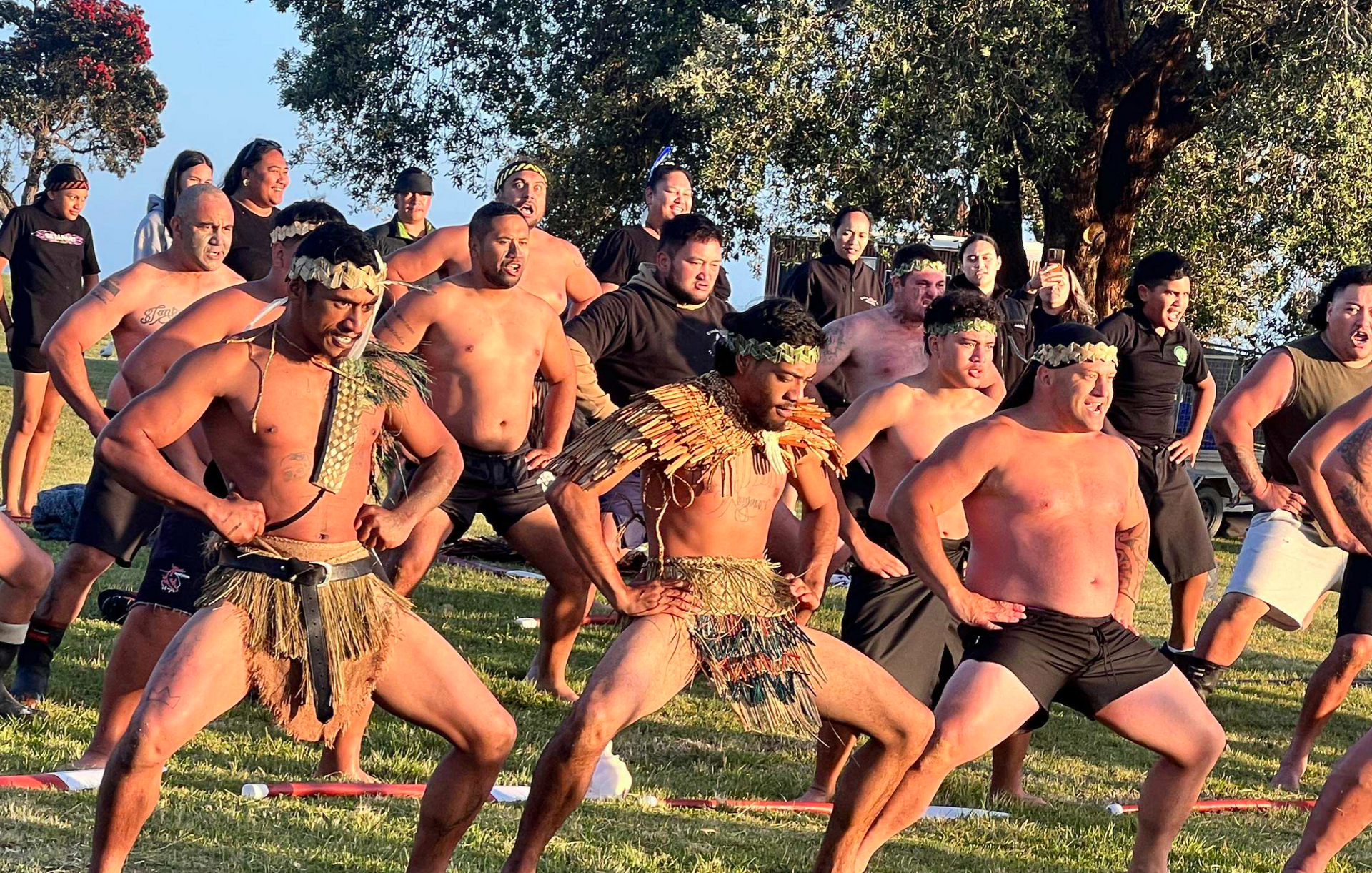
After more than two decades, Te Kotahitanga o Ngāti Kahu was standing together again.The revived kapa performed at Te Hiku Maiangi o Muriwhenua Cultural Festival in November 2023 and returned in November 2025.
That continuity is perhaps the strongest measure of success. The kapa was revived to endure. Whānau continued to stand together, their waiata continued to be heard, and another generation became part of the story.